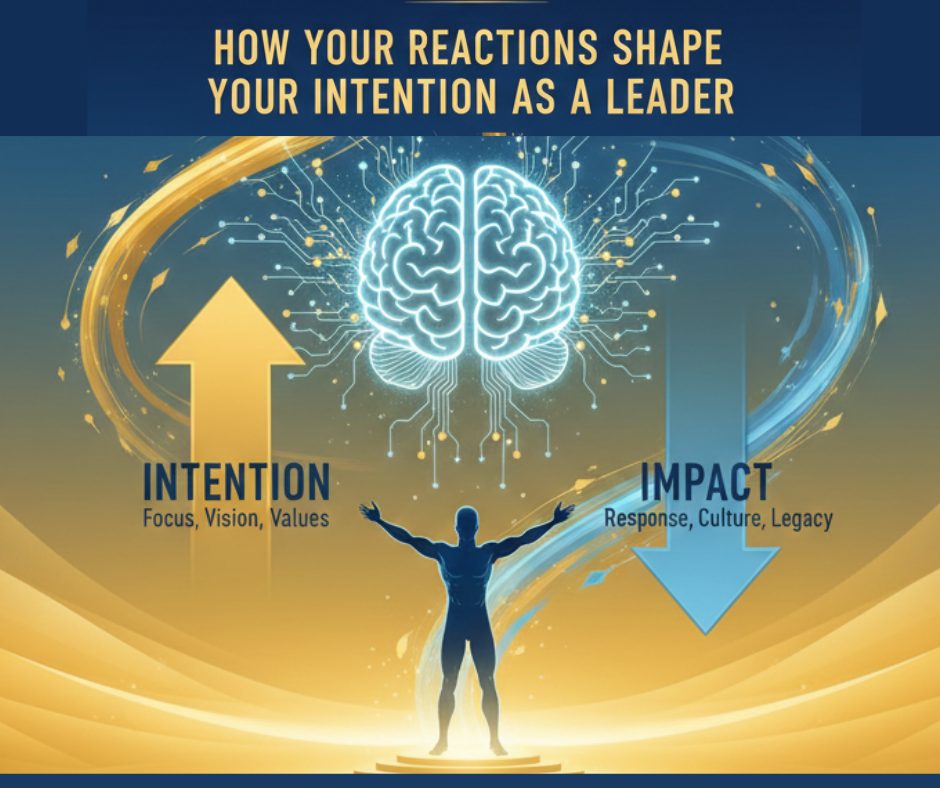
In the world of leadership, we often talk about Intention. We set goals, we map out our vision, and we decide exactly what kind of impact we want to have when we walk through the office doors. But here is the raw truth that separates the bosses from the legends: Setting an intention is only half the battle. How you REACT when the world pushes back is what actually defines your leadership.
Your intention is your compass, but your reaction is the actual path you carve. If you aren't conscious of your responses, your day won't be dictated by your values, it will be dictated by external chaos.
Why Your Reactions Are the "Emotional Thermostat"
As a leader, you are the emotional thermostat of your organization. You don’t just experience the climate; you set it.
If you react to a missed deadline with frustration or impatience, you aren't just "venting", Uyou are signaling to your team that mistakes are met with fear. This creates a culture of uncertainty. However, when you respond with composure and a solution-oriented mindset, you are building a fortress of trust and resilience. Your team stops looking for someone to blame and starts looking for a way to win.
The Power of the Pause
The most powerful tool in your leadership toolkit is the Pause. When a crisis hits, your brain's initial impulse might be defensive or reactive. Before you speak, before you hit "send" on that email, take a breath. Ask yourself: “Does this response align with the leader I intended to be today?” This single moment of mindfulness is the difference between an impulsive mistake and an intentional victory. It ensures you stay in the driver's seat of your emotions.
Reframing: Turning Roadblocks into Fuel
A setback is only a failure if you react to it like one. Intentional leaders choose to view obstacles as "Growth Data." Instead of asking, "Why did this happen to me?" they ask, "What is this teaching us?" By intentionally reframing challenges as opportunities, you shift the energy of the entire room from defeat to discovery.
Leading with Emotional Intelligence
Leadership is, at its core, the management of energy. Emotional Intelligence (EQ) is the bridge between your intention and your impact. Being aware of how your stress affects your communication is vital. When you remain empathetic and calm under pressure, you reinforce your intention to lead with clarity. You aren't just giving orders; you are providing a steady hand that people want to follow.
Communicating with Radical Purpose
Every interaction is an opportunity to either build a bridge or burn one. If your intention is to foster collaboration, but your reaction to feedback is defensive, you have a misalignment. Communicate with purpose. Respond to conflict with an open mind. When you treat feedback as a gift rather than a threat, you empower your team to be bold, innovative, and honest.
Adaptability vs. Reactivity
Being intentional doesn't mean being rigid. In fact, the most intentional leaders are the most adaptable. The world will change, plans will shift, and challenges will arise. The reactive leader panics when the plan fails; the intentional leader acknowledges the shift, adjusts the sails, and maintains a laser focus on the solution.
Your intentions shape your focus, but your reactions determine your impact. Today, don't just decide what you want to achieve. Decide how you will show up when things don't go according to plan. That is where true leadership is born.
Ready to Lead with Purpose?
Are you ready to stop reacting to the world and start shaping it? Let’s align your daily habits with your ultimate vision.
Schedule a complimentary 30-minute consult with me to get started.