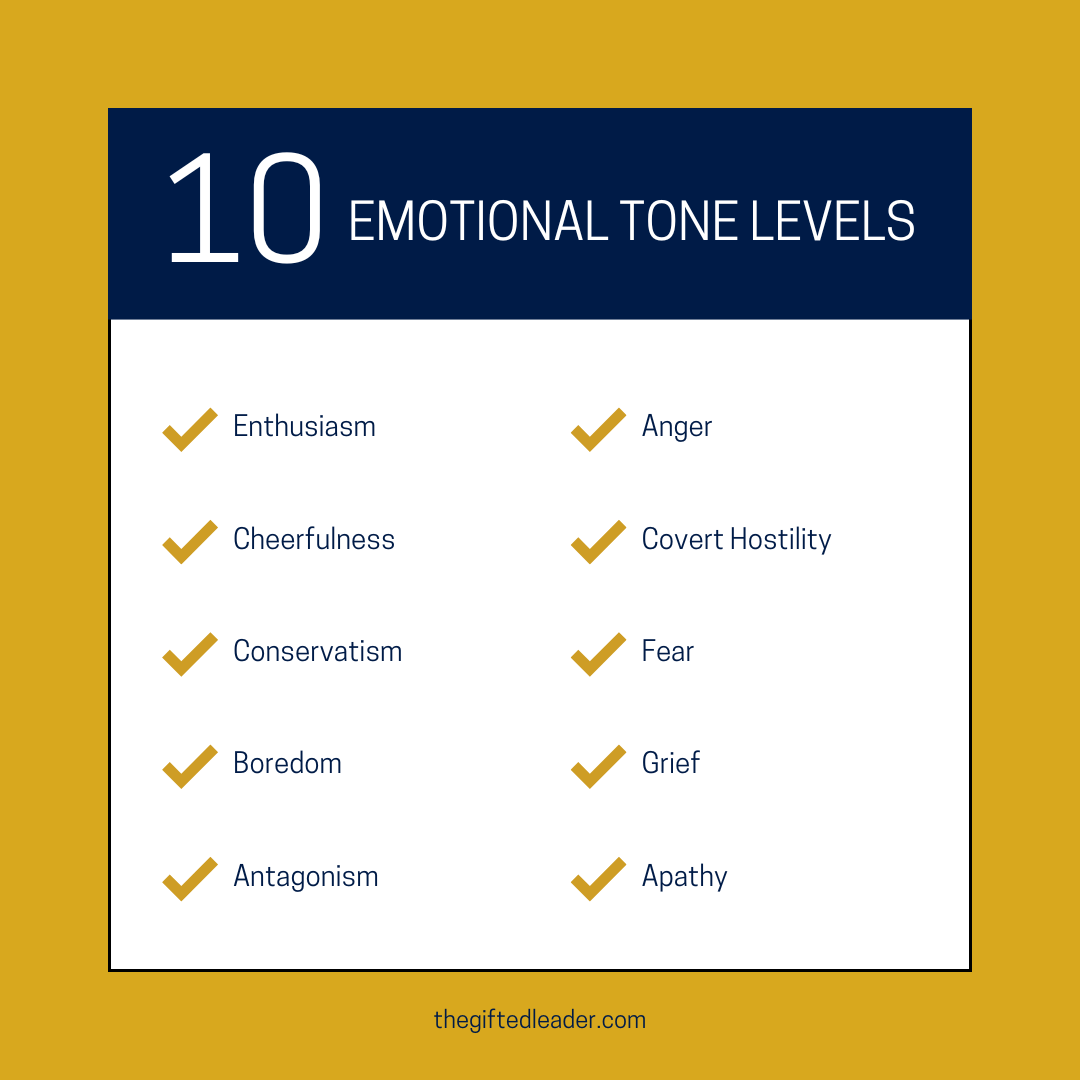
In the realm of high-stakes leadership and team building, communication is often the difference between a thriving culture and a stagnant one. However, effective communication is about more than just the words we choose; it is about the emotional frequency we project. At The Gifted Leader, we believe that mastering the Emotional Tone Scale is one of the most powerful tools a leader can possess to build rapport, resolve conflict, and inspire action.
Understanding the Emotional Tone Scale allows you to recognize where a person stands emotionally and adjust your delivery to meet them there. By following these seven steps, you can transform your interactions from surface-level exchanges into deep, impactful connections.
1. Identify the Emotional Frequency
Before you speak, you must observe. High-level communication begins with active perception. Pay close attention to a person’s body language, the cadence of their voice, and their choice of words. Are they exhibiting signs of "Anger" or "Antagonism"? Or are they vibrating at the level of "Enthusiasm" and "Cheerfulness"? Identifying their current baseline is the first step toward a successful interaction.
2. Meet Them Where They Are: Matching Tone
A common mistake leaders make is attempting to "fix" a low emotional state with forced positivity. This often creates a disconnect. Instead, aim to initially match their tone. If a team member is experiencing sadness or grief, respond with quiet empathy and calm understanding. If they are excited about a new project, mirror that energy. This creates immediate rapport, signaling to the other person that they are seen and understood.
3. The Power of the Gradual Uplift
Once you have established rapport by matching their tone, you gain the "emotional permission" to lead. You can now gradually shift the conversation toward a higher frequency. For example, if you are speaking with someone in a state of boredom, you might introduce a thought-provoking question or a new perspective that sparks mild interest. The goal is to guide them up the scale one step at a time, rather than demanding an immediate jump to joy.
4. Prioritize Sensitivity and Adaptability
Leadership requires a high degree of situational awareness. Forcing a tone change too quickly can backfire and appear insensitive. If a colleague is grieving a loss, being overly "bubbly" will alienate them. In these moments, your role is to be a steady, supportive presence, gently guiding the dialogue toward more constructive or peaceful emotions only when they are ready.
5. Align Your Non-Verbal Cues
Your words only tell half the story. To communicate effectively, your body language, facial expressions, and vocal inflection must align with the tone you are aiming for. If you are trying to uplift someone but your arms are crossed and your eyes are wandering, your message will feel hollow. Authenticity in your physical presence reinforces the trust you are trying to build.
6. Practice Active Listening as a Bridge
Trust is the foundation of any emotional shift. Show that you are truly present by acknowledging their feelings without judgment. Use phrases like, "I can see you're really frustrated by this situation," to validate their experience. Once someone feels heard, they are much more likely to follow your lead when you steer the conversation toward potential solutions.
7. The Golden Rule: Stay Authentic
While the Emotional Tone Scale is a strategic tool, it must be used with genuine intent. People are highly intuitive; they can sense insincerity from a mile away. Your adjustments should come from a place of service and a desire to help the other person thrive, not from a desire to manipulate.
Elevate Your Leadership Today
Mastering the Emotional Tone Scale will not only make your professional interactions smoother, but it will also enhance your personal relationships. When you lead with emotional intelligence, you become a catalyst for positive change in your community.
Ready to hone your communication skills and lead with more impact? I invite you to schedule a complimentary 30-minute consultation with me to start your journey toward visionary leadership.